Kluge-Ruhe-60Kluge-Ruhe-Logo-only-60
in 
partnership 
with
Papunya-Tula-Artists-60Papunya-Tula-Artists-logo-only-60-v2
This website was developed for the exhibition Irriṯitja Kuwarri Tjungu | Past & Present Together: Fifty Years of Papunya Tula Artists that was on view at the Kluge-Ruhe Aboriginal Art Collection of the University of Virginia from 2021-23 and the Embassy of Australia in Washington, DC in 2024. It was made possible by our creative partnership with Papunya Tula Artists and the generous support of UVA Arts Council. Site design by Urban Fugitive for V21 Artspace.
Go Back

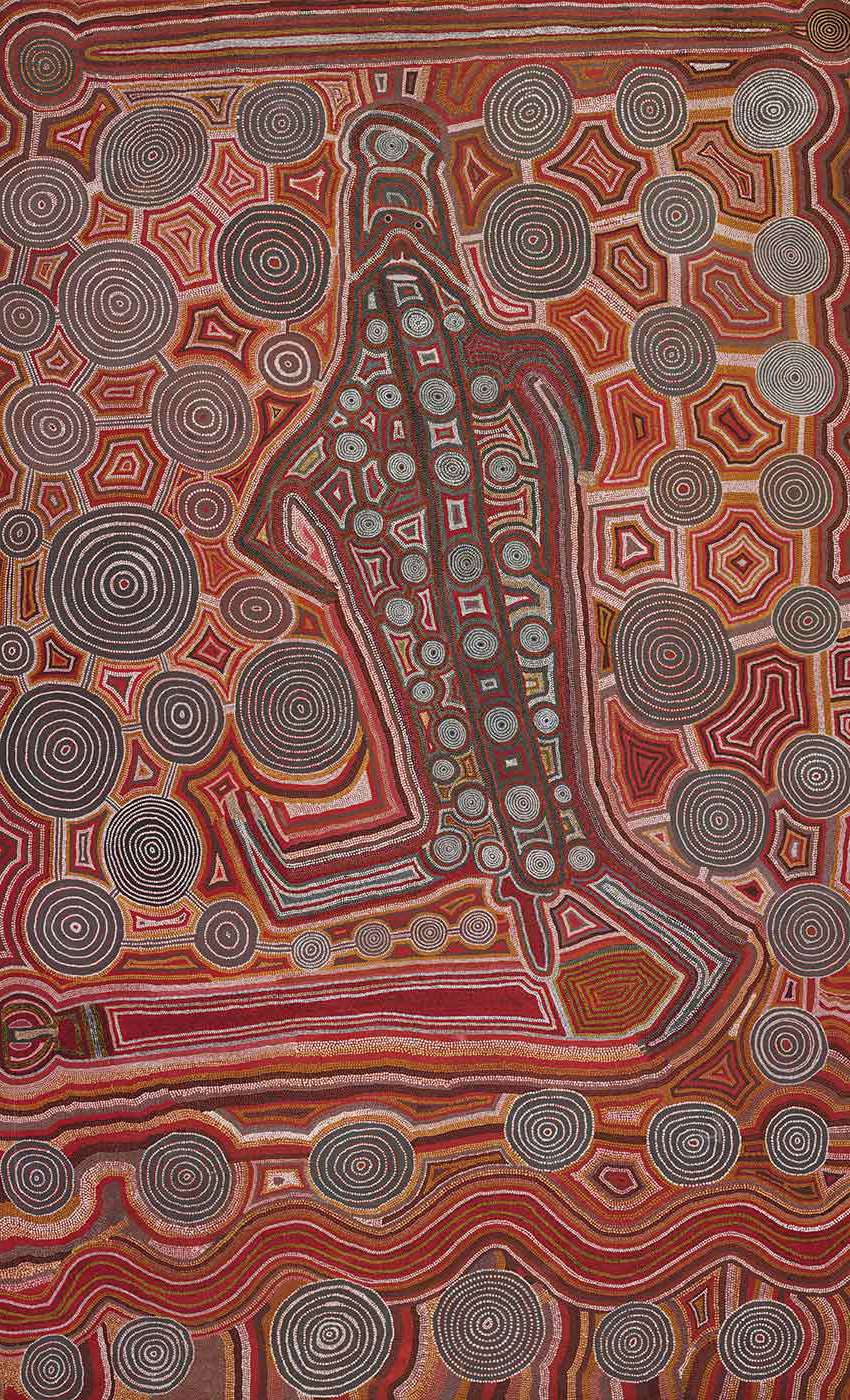
Uta Uta Tjangala

Old Man Dreaming at Yumari
1973

One constant is that the power of Tjukurrpa is manifestly everywhere in these works. A brilliant painting in this exhibition attributed to Uta Uta Tjangala, Old Man Dreaming at Yumari (1973), may bear an iconic resemblance (in shape) to the X-shaped rockhole at Yumari, as some others of his paintings of Yumari do. However, I believe it also transposes the figures I once saw engraved on an overpainted oval-shaped wooden board left behind in a truck driven by Andrew Crocker, manager of Papunya Tula Artists in 1981. For us, it has to be enough that the possibly sacred markings traced covertly are pure indices of their power, held in the mind of the painter, and the few notes to accompany it simply tease us as viewers who lack deep cultural knowledge and have only the experience of the revelation.

FRED MYERS

Language Group: Pintupi
Dates: 1926-1990

Uta Uta Tjangala was born in Dovers Hills, far west of Papunya. In the late 1950s, he led his family to Ikuntji (Haasts Bluff) where they made their first contact with white Australians. He later moved to the nearby government settlement of Papunya where, in 1971, he became one of the founding members of the Western Desert painting movement. Uta Uta was an important agitator for the return to homelands and was instrumental in establishing the Pintupi outstation at Yayayi in 1973, which would eventually result in the establishment of permanent settlements at Walungurru (Kintore) and Kiwirrkurra. His 1981 painting, Yumari, has become one of the most highly regarded artworks of the Papunya Tula art movement and helped gain international interest in Australian Aboriginal art. In 1985, Uta Uta was awarded the National Aboriginal Art Award.

Are you related to this artist? Are you a scholar of artwork from the Papunya Tula movement? Please contact us at kluge-ruhe@virginia.edu if you would like to add something to this page or see something that is missing or incorrect.
chevron-leftchevron-right